
Video communication as part of a secure IT infrastructure
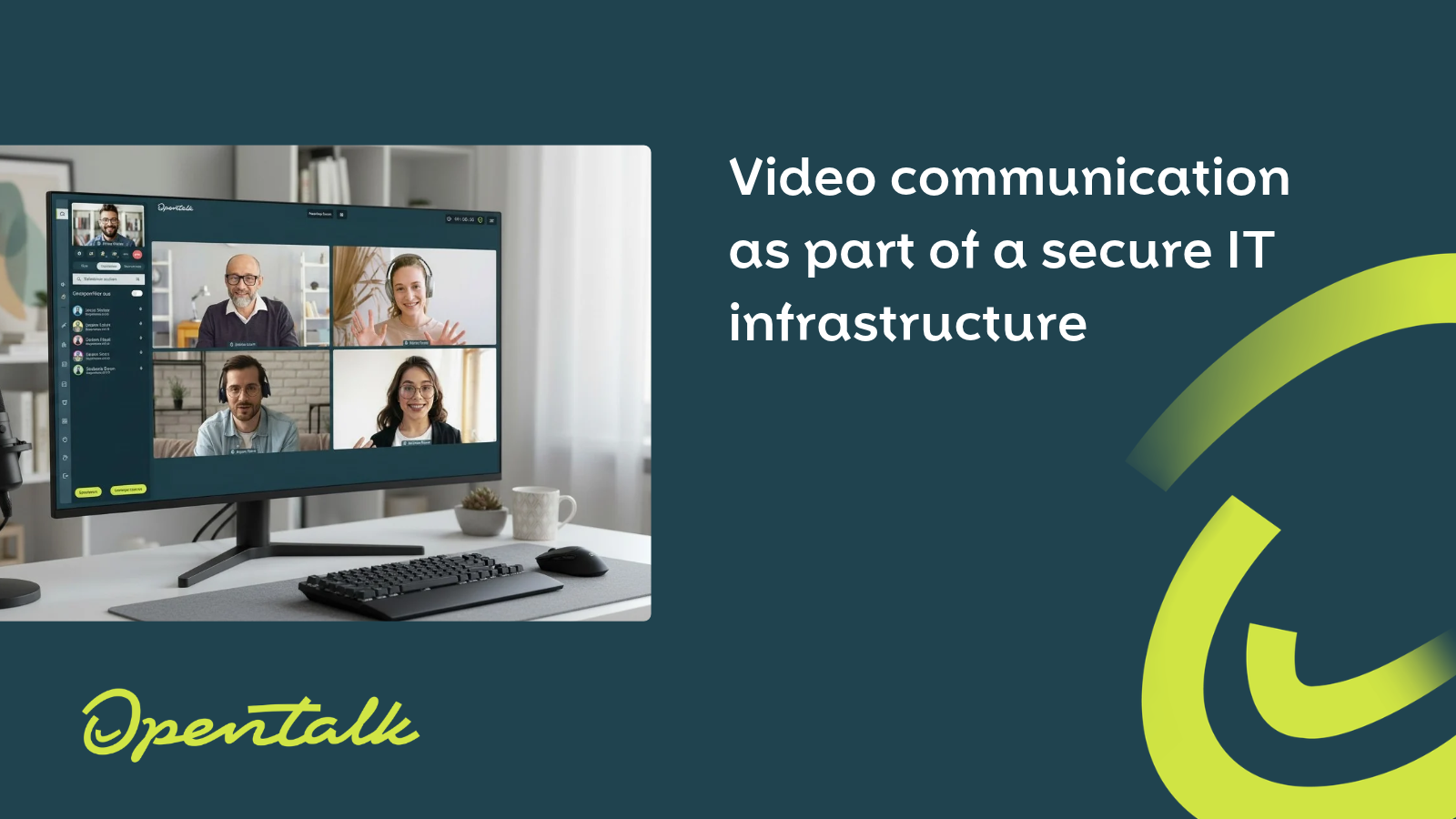
Whether it’s a status meeting, coordination with external service providers or a crisis team convened at short notice: video conferencing has long since become an integral part of business communication in companies, government departments and public institutions.
The more sensitive the content being discussed and the higher the requirements for security, data protection and availability, the more important it becomes to select and configure the video conferencing solution used.
When video communication becomes a security concern
A video conference connects people, devices, identity services, networks and, frequently, other applications. When evaluating a solution, therefore, the focus should not be solely on the quality of the picture and sound.
Other questions are also crucial:
Who is authorised to set up a conference and invite participants? Can external individuals be clearly distinguished from internal users? Who is authorised to share content, start recordings or admit additional participants? What data is generated during a conference and where is it processed?
Particularly in sensitive areas of application, such aspects must remain controllable from both a technical and organisational perspective.
Control begins before joining
Security in video conferences does not begin only during the call. Even the planning and invitation stages influence how tightly a meeting can be controlled.
Organisations should, amongst other things, specify which groups of people are permitted to create conferences, how internal users are authenticated, and under what conditions external participants may join. Moderation and presentation rights, recordings, and retention periods for conference data should also be clearly regulated.
The technical platform can provide the relevant functions. However, their effectiveness depends on how they are configured and integrated into internal processes.
OpenTalk for secure video communication
OpenTalk is an open-source solution for video conferencing. The open source code essentially enables a technical audit of the software used and helps to understand the structure and functioning of the solution.
For sensitive use cases, OpenTalk offers functions that allow access and permissions to be controlled. These include, amongst other things, waiting rooms, differentiated roles and moderation rights, as well as functions for the controlled handling of recordings.
OpenTalk can be operated as a cloud service in German data centres or within an organisation’s own infrastructure. Which operating model is suitable depends on the security requirements, the available resources and the desired level of technical control.
Digital sovereignty and security considered together
When selecting a video conferencing solution, it is not only crucial to consider which functions a platform offers, but also where data is processed, what dependencies arise and what options for switching providers exist.
Open interfaces, different operating models and open source can help to maintain control and freedom of choice. At the same time, video communication should be integrated into security, data protection and business continuity strategies.
Video communication is therefore more than just a traditional office application: it forms part of an organisation’s digital infrastructure. The interplay between the technical platform, operating model, configuration and organisational requirements is crucial.
More articles
How open source is being accepted in Schleswig-Holstein
Schleswig-Holstein relies extensively on open source in its state administration.
DINAcon 2026: How secure are our video conferences?
Video conferencing has become an indispensable part of day-to-day collaboration.